



Industry Analysts Discuss Rate Hike's Impact on Vehicle Sales
The Federal Reserve voted unanimously today to increase its target funds rate by a modest quarter point. One market research firm believes that could cut into sales by 150,000 units.
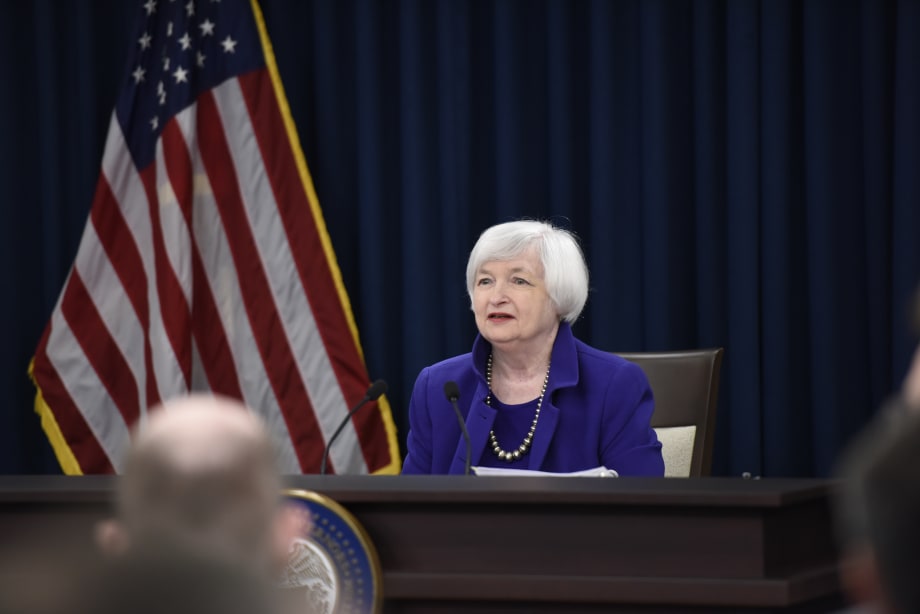
Photo courtesy of Federal Reserve Flickr.
WASHINGTON, D.C. — As expected, the Federal Reserve approved the first hike in the federal funds rate in nine years during the Federal Open Market Committee meeting this morning. The modest quarter-point increase takes the Fed’s target funds rate from zero percent to 0.25% to 0.25% to 0.5%.
In a statement released shortly after the unanimous vote, the committee cited improvement in labor market conditions and the expected rise in inflation as reasons for approving the increase.
“Given the economic outlook, and recognizing the time it takes for policy actions to affect future economic outcomes, the committee decided to raise the target range for the federal funds rate to ¼ to ½ percent,” the statement read. “The stance of monetary policy remains accommodative after this increase, thereby supporting further improvement in labor market conditions and a return to 2% inflation.”
Most market analysts expect the increase will have a minimal impact on car sales. Last week, J.D. Power said a quarter-point increase could cut into new-vehicle demand by 150,000 units. That amounts to a 0.83% reduction in the industry’s total sales given last month’s 18 million SAAR, noted Dave Sargent, vice president of Global Automotive at J.D. Power.
“With any hike, there will be a reduction in demand,” he said, noting that consumer spending habits aren’t likely to change. “Now, that doesn’t necessarily mean sales will fall by that much, but the natural level of demand will fall by 150,000.”
According to a survey conducted by J.D. Power prior to the committees vote, 36% of respondents believed an increase would be good for the economy. The majority of people who thought this way were from older generations that have seen first-hand what an interest rate hike means — that the economy is doing well. They also tend to have fewer loans they’re still paying off and have more interest-bearing accounts that will benefit from an interest rate hike.
Younger generations, however, weren’t so positive about the increase. J.D. Power noted that this demographic, which stands to take the bigger hit from the hike, is likely to be steered away from vehicle purchases as a result.
“Some consumers might think, ‘OK, the interest rate is going to go up, maybe this is not the time to buy a new vehicle. I may just delay the purchase and wait for things to settle down.’ Or they might just choose to spend a little less on the vehicle,” Sargent said. “There is that element to it … the danger that with the first increase in many years, some consumers may get spooked until they see what the actual impact will be on their monthly payment.”
With the Fed’s increase, consumers can expect to pay about $10 more a month on an average payment of $400. Sargent said it would take a hike of a couple of percentage points for consumers to really feel the impact on their loans. Kelley Blue Book analyst Jack Nerad agreed.
“The issue is not so much what a quarter point increase would do to the typical car payment but what a climate of increase interest rates would do to consumers’ perception of their personal finance situations,” he said. “Rising interest rates will negatively affect home values, and that, in turn, will negatively affect individuals’ perception of their own financial healthy. When people don’t feel positive about their financial situations, they don’t buy cars.”
Analysts also believe it will be the industry that will swallow the additional cost of the recent hike, which will cut into the profitability of automakers, dealers and finance companies. The expectation is that automakers, fearing the loss in sales, will increase incentive spending to offset the increase.
Tom Webb, chief economist for Cox Automotive, said he’s not concerned about industry-specific impacts, but rather the possible macro-economic reverberations that could derail an otherwise slow-growing U.S. economy. He noted that he will continue to monitor how the markets react.
“Even after several rate hikes, the cost of funds will remain exceptionally low and captive lenders won’t find it overly expensive to buy rates down to today’s attractive zero percent offers,” said Tom Webb, Cox Automotive’s chief economist. “In any event, the old industry truism that ‘the availability of credit is more important than the cost of credit.’”
Originally posted on F&I and Showroom
More Dealer Ops

Ladies and Gentlemen, This Is a Dealership: Why the Fundamentals Still Decide Who Wins
A teaching moment by a legendary football coach happens to apply perfectly in the auto retail space. Learn what it is and how to use it to your store’s advantage.
Read More →
Timing the Market Can Hurt Long-Term Program Performance
For dealer-owned reinsurance entities, avoiding volatility entirely can mean falling behind inflation and missing market rebounds that drive long term surplus growth. Missing just a handful of strong market days can materially impact cumulative returns—an important reminder for long horizon trust and investment strategies.
Read More →
Dealer Ads and the FTC
The agency has made it clear in recent enforcement actions and warnings, in auto retail and other industries, that advertised prices must include all nonoptional costs to the consumer.
Read More →
Used Autos Supply Dwindles
The March shopping surge, despite high prices, cut into inventory by the most since the thick of the pandemic, Cox Automotive analysts calculated.
Read More →
Managing Risk Effectively Through Changing Times
The variables influencing risk pricing have changed significantly over the past five years. Being proactive and responsive to emerging trends is not optional but essential.
Read More →
Survey Reveals What Won't Fix What's Breaking Car Sales
AutoPayPlus says extra-long auto loans are trapping consumers and threatening the dealer trade-in cycle, and that the industry is leveraging the wrong tools to combat high MSRPs.
Read More →
IA American Appoints Two Execs
Senior vice presidents of the company's agent and dealer channels chosen to support general agents and help auto dealers with sales and performance.
Read More →
Cox Automotive Acquires Inspection Firm
Full ownership of Alliance Inspection Management, or AiM, meant to unlock growth for Manheim inspection capabilities
Read More →
Assurant Expands Partnership With Holman
Extended collaboration delivers training, products and performance development to 30 newly acquired Holman dealerships
Read More →
Franchises, Throughput Down in First Half
A handful of states see franchise growth through June, while EV sales per store boost overall business in U.S.
Read More →